
xAPI at Scale
600% More Learning Data
Project Background:
In 2024, the LCMS I manage recorded nearly 80 million interactions from more than 130,000 unique users. Every one of those interactions is a statement: a learner opening a learning material, visiting a page in a self-paced course or paperless guide, or making a granular selection in courses myself and other instructional designers build. A few years earlier, none of that learning signal existed. Learning teams could tell you a course was completed, and not much else. Completions and seat time alone don't tell you where learners struggle, what they revisit, or which content actually gets used. Finally after working with multiple vendors towards this goal, we had the technical capability to capture richer data.
Capability isn't adoption though - so from 2020 to 2023, a new deliverable I supported called the paperless guide replaced print-based participant workbooks, with persistent HTML documents, and because every page visit generates a statement, interaction data began climbing. This move not only saves the organization upwards of six figures annually in printing and classroom material assembly costs, but it also positioned us for deeper insights into learner behaviors. In 2023, my team internally tested and validated vendor platforms to confirm the organization was ready for our next evolution, xAPI at scale.
2024 was the adoption push. Rather than mandate anything, I championed xAPI through the learning technology community of practice I lead: what it is, why it matters, how to build content in our authoring tools, and most importantly what the resulting data makes possible. I paired those sessions with direct partnership, working alongside designers from several lines of business to design, develop, and deploy their first xAPI deliverables. The result was a 600% increase in xAPI data generation across our learning organization.
The payoff is what the data reveals. Month-by-month engagement now tells a story leadership can act on: an early-summer peak driven by a company-wide code of conduct and workplace policy push, and an early-fall peak driven by new-hire welcome content, brand onboarding, and security and compliance training. One business unit we partnered with went further, using their engagement data to shape their learning strategy, improve existing training content, and decide where to focus their resources.
That's the shift this project was always about: from delivering content to reading the signal it generates. My director summed it up better than I could: "It's hard to express how transformative this is for the company."
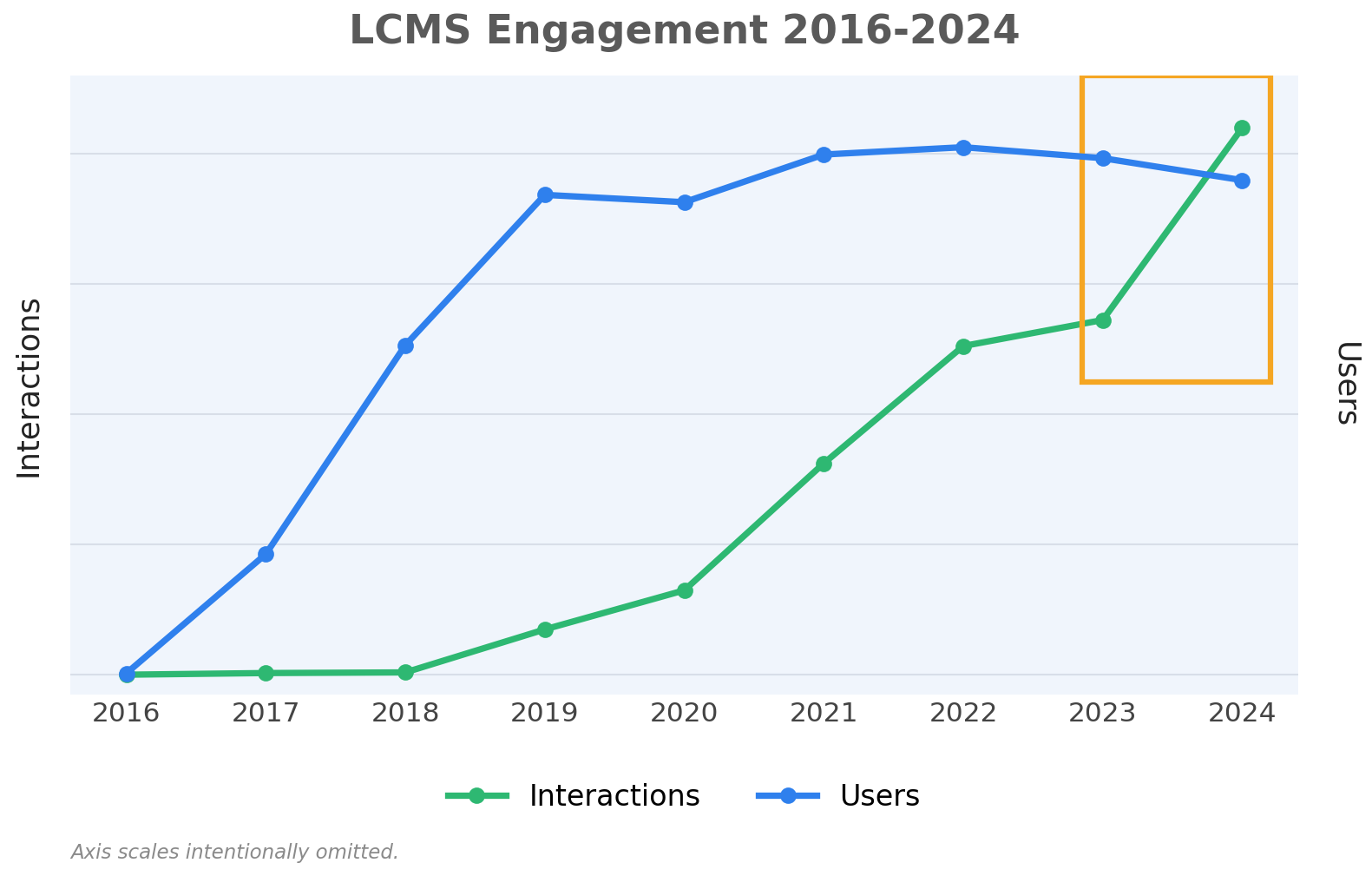
Select this image to see how engagement evolved from the LCMS 2016 launch through 2024, including the paperless guide inflection in 2020 and the xAPI adoption push from 2023-2024.
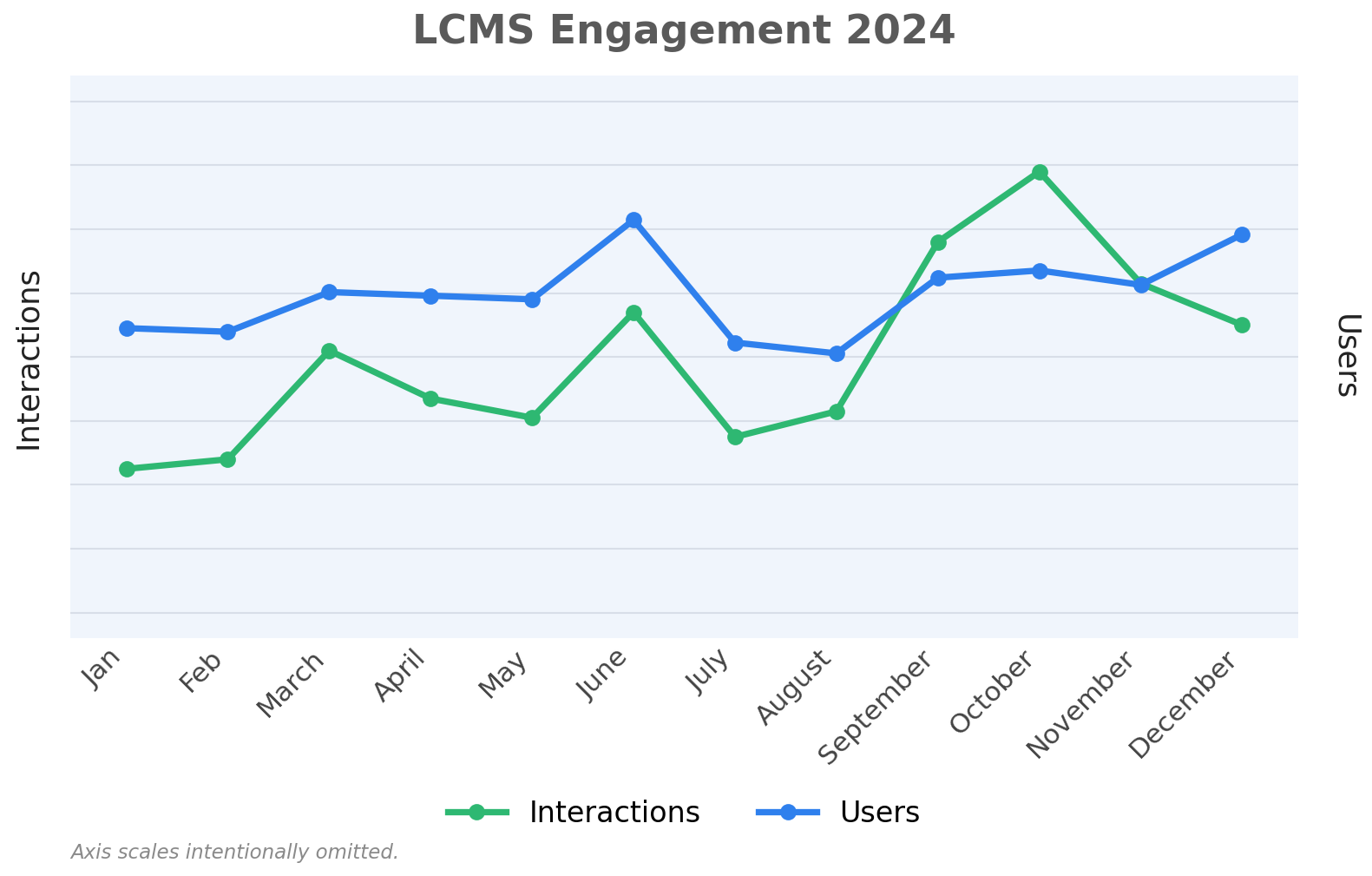
Select this image to view 2024 engagement month by month. The peaks line up with company-wide compliance and onboarding efforts, exactly the kind of insight completion data alone can't show.
What was my role in this project?
Identified the gap between completion-only reporting and the engagement questions stakeholders were actually asking
Helped onboard learning design teams into the content hub, one business unit at a time, building the user base that would later generate the data
Supported the shift from print workbooks to paperless HTML guides, the deliverable that first proved page-level interaction data was worth collecting
Internally tested and validated vendor platforms to confirm the organization was ready for xAPI at scale
Led community of practice sessions that taught xAPI concepts, how to build and deploy in our tools, and highlighted use cases across every learning team in the organization
Partnered directly with designers in several lines of business to design, develop, and deploy their first xAPI deliverables
Established standards, from page-level statements to granular UI selections, so data from different teams could be compared and trusted
Helped a partner business unit use their engagement data to inform learning strategy, improve content, and focus resources
Presented engagement results to leadership and used early wins to recruit more teams into the practice
This project was made with the following tools:

Xyleme

xAPI